E2M RESEARCH · MARKET ENTRY TIMELINE · SEP 2026

Benchmark de Prazo para Entrada no Brasil 2026

O que uma empresa estrangeira pode razoavelmente alcançar no Brasil nos dias 1, 7, 30, 60, 90 e 180 — por modelo de entrada, dependência e caminho crítico.

Updated 23 Sep 20266 entry modelsDay 1 → Day 180Official facts + E2M planning ranges
Official registration context1d 7hBrazil average · Jul 2026 · excludes licenses
Fastest commercial startDay 1Validation can begin before entity setup
Operating decision gateDay 90Useful target for many non-regulated models
Complex / regulated horizon180+Plan for dependencies, not a universal SLA
Direct answer

Quanto tempo realmente leva uma entrada no Brasil?

Não existe um único prazo de entrada no Brasil. A validação comercial pode começar no dia 1, uma primeira contratação via EOR pode ocorrer em semanas e o registro doméstico de uma empresa pode ser rápido quando a documentação está pronta. Mas a prontidão operacional pode continuar bloqueada por documentos estrangeiros, banco, licenças, aduana, imigração ou regulação setorial. Por isso o benchmark separa o relógio rápido do registro do caminho completo até operar.

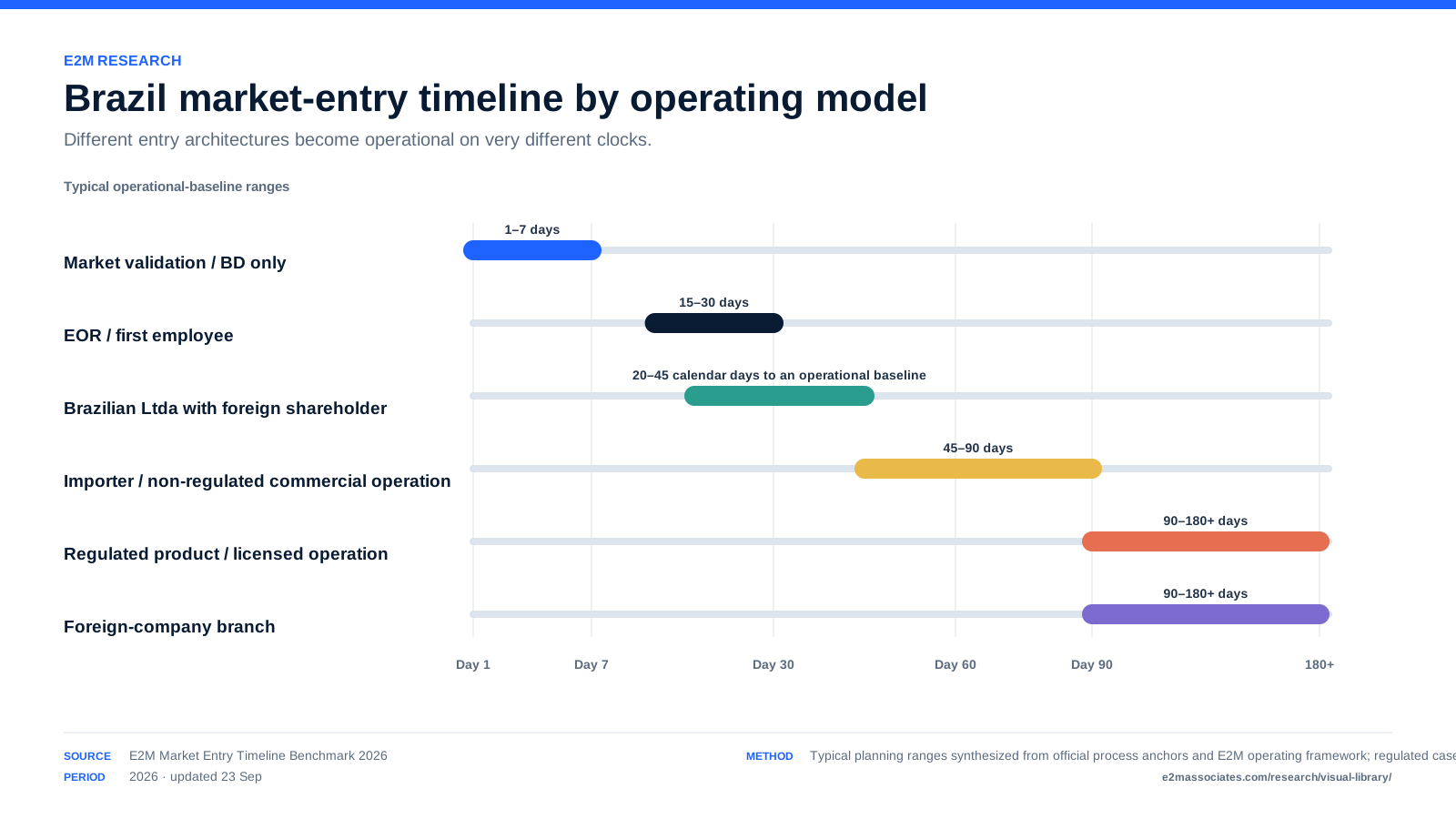
Timeline compara faixas típicas de prazo operacional para seis modelos de entrada no Brasil.
Brazil Market-Entry Timeline by Operating Model
Source: E2M Market Entry Timeline Benchmark 2026 · Period: 2026 · updated 23 Sep · Method: Typical planning ranges from official process anchors and E2M operating framework.
Entry architecture

Six operating models, six clocks

Choose the architecture first. A one-day registration headline is irrelevant if your critical path is apostilled documents, a regulated authorization or import readiness.

VALIDATION

Validação de mercado / BD sem entidade

Meet customers, test messaging, build pipeline without a Brazilian entity.

Planejamento best-case: Day 1

Planejamento típico: 1–7 days

Caminho crítico: Named local owner + ICP + target account list

EOR

EOR / primeiro funcionário

Employ a first Brazil-based team member without first incorporating a local entity.

Planejamento best-case: 7–14 days

Planejamento típico: 15–30 days

Caminho crítico: Candidate selected + provider onboarding + compliant employment terms

LTDA

Ltda brasileira com sócio estrangeiro

Create a Brazilian legal entity, CNPJ and core registrations; banking, invoicing and licenses may extend the path.

Planejamento best-case: 7–15 business days after documents are ready

Planejamento típico: 20–45 calendar days to an operational baseline

Caminho crítico: Foreign corporate documents + apostille/legalization + sworn translation + resident representative

IMPORTER

Importador / operação comercial não regulada

Entity + Siscomex readiness + customs representation + product/logistics workflow.

Planejamento best-case: 30–45 days

Planejamento típico: 45–90 days

Caminho crítico: Entity operational + fiscal setup + Siscomex habilitation + customs/logistics design

REGULATED

Produto regulado / operação licenciada

Entity plus sector-specific authorizations, product/establishment approvals or import controls.

Planejamento best-case: 60–90 days

Planejamento típico: 90–180+ days

Caminho crítico: Regulatory classification + complete dossier + regulator review + facility/product dependencies

BRANCH

Filial de empresa estrangeira

Operate as an authorized Brazilian branch of a foreign company rather than a Brazilian subsidiary.

Planejamento best-case: 60–90 days

Planejamento típico: 90–180+ days

Caminho crítico: DREI prior authorization + foreign corporate approvals/documents + registration/legalization
Visual timeline

What should be true by each decision point?

These are outcome gates, not promises. Parallel workstreams compress time; missing prerequisites expand it.

Day 1

Decide the entry hypothesis and start local evidence collection.

Day 7

Have the first workstreams moving in parallel — commercial, legal, talent and operating design.

Day 30

Reach a first decision gate: demand evidence, entity/EOR path, provider stack and major blockers visible.

Day 60

Many clean non-regulated models can reach an operating baseline; customs/licensing may still govern the clock.

Day 90

A strong target for evidence-backed go/no-go, first local team and recurring commercial execution.

Day 180

A realistic stabilization horizon for scaled or more regulated entry models.

Critical path

Best-case vs. typical planning range

The benchmark models end-to-end readiness rather than only the fastest administrative sub-step.

Entry modelBest caseTypicalCritical path
Validação de mercado / BD sem entidadeDay 11–7 daysNamed local owner + ICP + target account list
EOR / primeiro funcionário7–14 days15–30 daysCandidate selected + provider onboarding + compliant employment terms
Ltda brasileira com sócio estrangeiro7–15 business days after documents are ready20–45 calendar days to an operational baselineForeign corporate documents + apostille/legalization + sworn translation + resident representative
Importador / operação comercial não regulada30–45 days45–90 daysEntity operational + fiscal setup + Siscomex habilitation + customs/logistics design
Produto regulado / operação licenciada60–90 days90–180+ daysRegulatory classification + complete dossier + regulator review + facility/product dependencies
Filial de empresa estrangeira60–90 days90–180+ daysDREI prior authorization + foreign corporate approvals/documents + registration/legalization
E2M Research methodology

Como interpretar o benchmark

Official process facts are never silently converted into end-to-end promises.

1 · Separate clocks

We distinguish official administrative timing from E2M end-to-end operating ranges.

2 · Best case

Clean documentation, prompt decisions, no material exception and parallel workstreams where legally possible.

3 · Typical

Allows normal document coordination, provider onboarding, authority queues and one or more dependencies.

4 · Critical path

The dependency that can block commercial operation even when every other workstream is complete.

5 · Not a legal SLA

E2M ranges are planning models. Regulatory and provider timelines must be revalidated for the exact company, activity and jurisdiction.

6 · Refresh

Quarterly and whenever a material registration, immigration, customs or licensing process changes.

Evidence register

Âncoras oficiais de processo

Primary sources define process constraints; E2M models the operating sequence on top.

Tier A · July 2026

Brazil company-opening process average

1 day 7 hours

Official Redesim statistic for viability + registration + CNPJ. It explicitly excludes municipal/state registrations and operating licenses.

Open official source ↗
Tier A · July 2026

Businesses opened in under one day

73.7%

Official Mapa de Empresas headline statistic; use as registration-process context, not full operational readiness.

Open official source ↗
Tier A · Current

Official incorporation sequence

Viability → CNPJ/registration → licenses

Licensing remains a separate final legalization stage and can vary by activity and municipality.

Open official source ↗
Tier A · Current

Foreign shareholder documentation

Resident representative + proof of legal existence + apostille/legalization + sworn translation

Foreign documents are a common critical-path dependency before the fast domestic registration clock is meaningful.

Open official source ↗
Tier A · Current

Foreign branch prerequisite

Prior DREI authorization

A foreign company establishing a branch, agency or establishment in Brazil generally requires prior federal authorization before registration.

Open official source ↗
Tier A · Current guidance

Manual Siscomex habilitation review

10 days

If a company request is selected for documentary analysis, Receita states a 10-day analysis period; automatic processing may be faster.

Open official source ↗
Tier A · Current RDC 743/2022 rule

Example regulated authorization SLA

Up to 60 days

Example for AFE/AE in ports, airports and borders; regulatory timing is product/activity specific and requirement notices can interrupt the clock.

Open official source ↗
Execution

Turn the timeline into a Brazil launch plan.

Use the benchmark to identify the dependency that actually governs your entry — then sequence commercial, legal, talent and operating work around it.

Interpretation

FAQ

Can a Brazilian company really be opened in about one day?

Official July 2026 Redesim data shows an average of 1 day 7 hours for the tracked opening process and 73.7% under one day. That statistic does not include all municipal/state registrations or operating licenses, and foreign-shareholder document preparation can precede it.

Why is the typical foreign-company timeline longer than the official registration average?

Because a foreign entry is an end-to-end operating problem, not only a CNPJ-registration event. Apostille/legalization, sworn translation, representative powers, banking, licensing, payroll, customs and sector regulation can sit on the critical path.

What can start before a Brazilian entity exists?

Market research, customer discovery, partner conversations, meetings, commercial validation and many planning workstreams can start immediately. Contracting, invoicing, employment, import and regulated activity depend on the chosen legal/operating architecture.

Is 90 days enough to enter Brazil?

For many non-regulated entry models, 90 days is enough to generate real commercial evidence and establish an operating baseline. It is not a universal deadline for regulated products, foreign branches or complex licensing.

Should we choose an EOR just because it is faster?

No. Speed is one variable. Permanent establishment, tax, control, talent strategy, customer contracting and expected scale should determine the architecture.

Research network

Related research

Brazil Market Entry Research

Canonical hub for entry strategy, sequence and validation.

Open →

First 90 Days in Brazil

Operational playbook for the first three months.

Open →

Market Entry Cost Benchmark

Connect timing choices to Lean / Base / Full entry economics.

Open →